There are thousands of irrational things I don't believe: I don't believe the world was created by magic unicorns. I don't believe that murder should be the first recourse for resolving a dispute. I don't believe that only males between the ages of 7 and 14 should receive education. I could go on ... and on ... but, to save boring you, I shall list only one more: I don't believe in any form of deity. So why do so many people think that it is either rational or acceptable to define me by the last of these things?
One of the more insidious trappings of apartheid in South Africa or the One Drop Rule in the United States was the arbitrary classification of humanity into "whites" and "non-whites". The definition of one race in terms of another is itself racist: these terms assume that "white" is the norm against which other racial attributes are measured. It demeans dark-skinned people by euphemising a characteristic they have and defining that characteristic in terms of what it is not. We don't call homosexual people "non-heterosexual" (or heterosexual people "non-homosexual").
An "atheist" is, by definition, a "non-theist", a person who does not believe in deities. Like to the race and sexuality examples above, it defines us in terms of what we are not and ignores what we are. It makes the assumption that some form of theism or religion is the norm against which we should be measured. It is similarly insidious.
I'm not referred to as a "non-murderer" or a "non-discriminatory-educator" (even though they are true), so why should I be referred to as a "non-theist". I'm a humanist, I'm a secular rationalist -- refer to me by those positive things, by things I choose for myself, not by my lack of credulity for superstitious mythology!
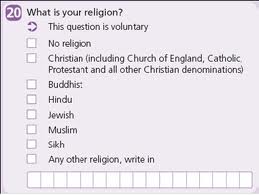
Yes, this is important. The coming census will not ask me to define my position in terms of a belief in magical unicorns or a position on the education of males. Quite correctly, there will not be a loaded question: "What kind of murder do you commit?" with response options of subspecies (genocide, uxoricide, drive-by shooting, etc.) and "non-murderer", but there will be one that asks: "What is your religion?" with response options of subspecies and "no religion". The unspoken assumption from this question, entirely unencumbered by such inconvenient things as contrary evidence, is that religion is the norm.
Every time we permit others to define us in terms of religion, by getting us to respond to loaded questions or calling us "atheists", we are playing into their hands by allowing them, instead of accepting us for what we are, to pass off their irrational superstition as the norm. It isn't.
Tet

Sunday, 27 February 2011


Thursday, 27 January 2011
Anti-Christian Discrimination? What a load of Bull!
Peter and Hazelmary Bull, the Christian B&B owners who refused to let a homosexual couple share a bed in their B&B, have decided to appeal against the judgement that declared that they should pay damages to the two men they offended. The appeal is reportedly being funded by a fundamentalist Christian organisation.
Christians in Britain claim that they are being discriminated against. If they are, this case does not support that thesis: the law does not allow the people with any religious affiliation (or with no religious affiliation) to behave in the bigoted way the Bulls did. To be treated, in the eyes of the law, exactly the same way everybody else is treated, is not discrimination.
On 2011 Jan 26, the BBC programme, The Moral Maze, addressed another aspect of this issue. Many Several contributors seemed to suggest that religious principles are being subverted by laws that prohibit discrimination against protected groups. This is entirely incorrect. To take the Bulls' case as an example, nobody has compelled them to run a B&B. It is illogical in the extreme to choose an occupation if the laws that govern it do not permit you to exercise your own particular brand of bigotry. The Bulls chose to sell a service; like the sellers of any other service, they have to abide by all the laws that govern that service. To permit them to contravene those laws because they believe a particular species of superstitious irrationality would, in effect, be discriminatory against anyone who does not share that belief.
Discriminated against? What a load of Bull!
Thursday, 2 December 2010
How the Church can Bankrupt You
A couple of years ago, we moved house. As we were in the process of buying the new house, our solicitor advised us to take out Chancel Repair Liability Insurance. This was the first we had heard of Chancel Repair Liability. The Church of England has a right to impose this liability on anyone owning land that it (the Church) used to own at the time of the Dissolution of the Monasteries (middle of the 16th Century). The liability, which can be imposed by the Parochial Church Council (PCC), on each and every landowner of these "rectorial lands" is to bear the cost of any repairs to the chancel (the bit of the church where the altar is).
It does not matter whether the landowner owns 100 hectares or 1 square metre; he or she can still be made liable, on the whim of the PCC and without any right of appeal, for repairs costing hundreds of thousands of pounds. The Wallbanks case (more about this later) is evidence that the Church of England is willing to exercise this right even if it means bankrupting people or forcing them to sell their homes.
In response to a petition, 10 Downing Street said in March 2008:
The assertion: "From October 2013, chancel repair liability will only bind buyers of registered land if it is referred to on the land register," is misleading if not downright deceptive. If, after October 2013, the property has not changed hands and the liability is subsequently "discovered", the landowner is still liable for this "blank cheque" charge.
The "relatively inexpensive insurance" that Downing Street says is available, is only available if you don't know if you are liable. If a search shows that your property is on rectorial land, you cannot take out insurance and your property may effectively be unsaleable -- i.e. valueless.
Back to the Wallbanks case. The Wallbanks family was found to be liable by the High Court, but the Appeal Court subsequently found in the family's favour, stating that Chancel Repair Liability is contrary to European Convention on Human Rights and that the PCCs are subject to Human Rights Act, 1998.
The PCC appealed to the House of Lords, which decided that PCCs are not public bodies and are therefore not bound by the Human Rights Act or the Convention on Human Rights. The PCC was funded by the Archbishops' Council, which requested donations of approx. £10,000 from each diocese, to take its case to the House of Lords. The Archbishops are, of course, among the 26 (maximum) "Lords Spiritual" in the House of Lords.
What we have here is a clear case of archaic practices being maintained for the benefit of the established church. The United Kingdom is one of only two modern countries to have reserved seats for clerics in its legislature (the other is Iran). There is no case, either in logic or in natural justice, for this or for the persistence of a law that requires those of us who are not members of a church to pay for the maintenance of its property.
The only just solution is the disestablishment of the Church of England and the repeal of all its privileges, including the public funding of its places of worship and its schools.
It does not matter whether the landowner owns 100 hectares or 1 square metre; he or she can still be made liable, on the whim of the PCC and without any right of appeal, for repairs costing hundreds of thousands of pounds. The Wallbanks case (more about this later) is evidence that the Church of England is willing to exercise this right even if it means bankrupting people or forcing them to sell their homes.
In response to a petition, 10 Downing Street said in March 2008:
Chancel Repair Liability has existed for several centuries and the Government has no plans to abolish it or to introduce a scheme for its redemption. The Government has, however, acted to make the existence of the liability much simpler to discover. From October 2013, chancel repair liability will only bind buyers of registered land if it is referred to on the land register. By that time, virtually all freehold land in England and Wales will be registered. The Government believes that this approach strikes a fair balance between the landowners subject to the liability and its owners who are, in England, generally Parochial Church Councils and, in Wales, the Representative Body of the Church in Wales.
The Government acknowledges that the existence of a liability for chancel repair will, like any other legal obligation, affect the value of the property in question, but in many cases this effect can be mitigated by relatively inexpensive insurance. It is for the parties involved in a transaction to decide whether or not to take out insurance.
The assertion: "From October 2013, chancel repair liability will only bind buyers of registered land if it is referred to on the land register," is misleading if not downright deceptive. If, after October 2013, the property has not changed hands and the liability is subsequently "discovered", the landowner is still liable for this "blank cheque" charge.
The "relatively inexpensive insurance" that Downing Street says is available, is only available if you don't know if you are liable. If a search shows that your property is on rectorial land, you cannot take out insurance and your property may effectively be unsaleable -- i.e. valueless.
Back to the Wallbanks case. The Wallbanks family was found to be liable by the High Court, but the Appeal Court subsequently found in the family's favour, stating that Chancel Repair Liability is contrary to European Convention on Human Rights and that the PCCs are subject to Human Rights Act, 1998.
The PCC appealed to the House of Lords, which decided that PCCs are not public bodies and are therefore not bound by the Human Rights Act or the Convention on Human Rights. The PCC was funded by the Archbishops' Council, which requested donations of approx. £10,000 from each diocese, to take its case to the House of Lords. The Archbishops are, of course, among the 26 (maximum) "Lords Spiritual" in the House of Lords.
What we have here is a clear case of archaic practices being maintained for the benefit of the established church. The United Kingdom is one of only two modern countries to have reserved seats for clerics in its legislature (the other is Iran). There is no case, either in logic or in natural justice, for this or for the persistence of a law that requires those of us who are not members of a church to pay for the maintenance of its property.
The only just solution is the disestablishment of the Church of England and the repeal of all its privileges, including the public funding of its places of worship and its schools.
Subscribe to:
Posts (Atom)