As the demand for evidence-based medicine gathers grows, especially in the NHS where many so-called Complementary and Alternative Medicines (CAM) are being re-examined for efficacy, the CAM proponents are increasingly declaring that their particular "health modalities" should be available on the NHS as a matter of "freedom of medical choice". It is reasonable to ask what the implications of this are.
Freedom of choice is a laudable thing, provided that it is informed and responsible. Choosing something about which we know nothing is potentially as stupid as choosing to walk across a motorway -- and it can have similar consequences. The tragic example of Penelope Dingle is a case in point, but she is only the tip of a huge iceberg of harm caused directly or indirectly by pseudomedicine. As in Ms Dingle's case, she was not directly killed by homeopathy (clearly, that which has no pharmacological effect can, by definition, have no adverse pharmacological effect), but because reliance on ineffectual pseudomedicine caused her to reject conventional interventions that would have prolonged her life and which may have cured her.
I should be clear that I am not claiming that conventional medicine never gets it wrong or that it is squeaky-clean in its methodology. It isn't; there have been some appalling errors and frauds. However, using that as a reason to use something of unknown or unproven efficacy is about as illogical as using a fatal motorway pile-up as a reason to leave the car at home and choose to skate-board in the middle lane instead! The blogger Guy Chapman puts it rather more eloquently: "Problems with medicine validate homeopathy in precisely the same way that plane crashes validate magic carpets."
Making an uninformed choice for yourself is one thing. It is another to make such a choice for those for whose health you bear responsibility. Parents who, for example, make an uninformed -- or, as in the case of MMR vaccine refusal, misinformed -- choice are unwittingly putting the health of their children at risk. This is one reason that it behoves the sceptic community to contest unevidenced claims for pseudomedicine, wherever they occur.
The beneficial claims made for a number of pseudomedical practices effectively boil down to an "argument from tradition", i.e. that they have been used for centuries or millennia. Apart from the inherent illogic of this (as David Colquhoun says of herbal medicine, it is "giving patients an unknown dose of an ill-defined drug, of unknown effectiveness and unknown safety") there is also the question of harm to those species whose body parts are used for pseudomedical practices. The "traditional medicine"-induced demise of the Amur tiger and poaching of rhinoceroses for their horns are both well known and well documented, but this is merely the tip of another iceberg. According to the Smithsonian, other animals that are endangered because their body-parts are used in traditional medicine include water buffalo, the Chinese alligator, the Asian elephant, musk deer, the sun bear, Grevy's zebra, wild banteng, and the hawksbill sea turtle. This is by no means a comprehensive list of animal species that are killed or maimed in order to meet a selfish demand for "freedom of choice in medical modalities".
Some may object that the use of animals for testing conventional medicines is equally cruel. That is a matter of opinion and individual judgement (and a tu quoque fallacy to boot), but the two things are not equivalent. The one is experimenting animals to establish whether there is robust evidence of efficacy for pharmaceutical substances for whose efficacy there is already some evidence. The other is killing and maiming animals to satisfy a demand for a product for whose efficacy there is no robust evidence.
As I write this, it is "Homeopathy Awareness Week", so where does homeopathy fit into this? According to the principles of homeopathy, "Medicines derived from the animal kingdom act energetically and rapidly" and "are especially indicated in potentially fatal crises or acute disorders as well as chronic diseases that have the character of the rapid destruction of organic tissue". Amongst the animals used by homeopaths are the medusae (e.g. jellyfish), various arthropods (insects, arachnids, etc.), and numerous reptiles, including snakes and lizards. There is a recent interest in the use of body-parts of birds, including those of humming birds, ospreys, herring gulls, pea-fowl and protected (in the UK) species such as the peregrine falcon and the golden eagle. Various mammals (or their body parts or secretions thereof) are also included in the homeopathic repertory, including bottlenose dolphin, badgers, beavers, cats, cattle, sheep, musk-deer, horses and skunks. And "testicular extracts of man" (i.e. semen to the rest of us. Please don't ask.).
Whilst we are on the subject of homeopathy awareness, any gay readers might be interested to know that, according to the principles of homeopathy as elucidated by James Tyler Kent, they suffer from "a sexual perversion caused by the miasms" . You would be forgiven for thinking that this is an archaic view that is no longer held in the 21st Century. You would be wrong.
Lastly, on this topic, I would not want to leave you with the false impression that homeopaths all exploit the animal kingdom for their remedies. This is simply not the case. In this Homeopathy Awareness Week it is my duty to give fair balance by ensuring that you are aware that they also use such diverse non-animal things as bacteria that don't actually exist, the light of the planet Venus or the star Polaris, various colours, a thunderstorm, the Berlin Wall, and water (which is dissolved in ethanol and - wait for it - water!). They have even outdone ordinary physics and managed to isolate a magnetic monopole for this gem.
So, please be aware and make informed decisions on your "choice of health-care modalities".
Tet

Wednesday, 19 June 2013

Monday, 17 December 2012
Coins, Astrology, Pseudomedicine and Gun Control
You can try this at home!
I have just tossed a coin ten times. I got three heads and seven tails. Should I assume that this coin has a probability of 0.7 for tails and 0.3 for heads? Let's see.
That sample of ten times was one of a hundred such samples that I recorded when tossing the same coin 1000 times. Taken as a whole, I had 503 heads and 497 tails, giving a probability (to two significant figures) of 0.50 for each possible outcome. What should I assume now? That the other 900 trials were flawed, or that my penny has a statistically equal probability of heads or tails?
I suggest that reasonable people will assume that the cherry-picked ten times was a normal statistical "blip" and that the coin is, in fact, "fair".
Apologists for pseudomedicine, which include the present Secretary of State for Health, eschew the same reasoning when it comes to clinical trials. They focus on the equivalent of the trial that gave seven tails and proclaim that "some trials show that homoeopathy [or antidepressants, or some other pseudomedicine] works better than placebo". Somehow they refuse to acknowledge that it is the totality of trials -- the thousand coin-tosses -- that must be taken into account, not just the few subsets that show a balance in favour of their pet species of pseudomedicine.
Similarly, those who subscribe to belief systems like astrology systematically ignore the many trials that demonstrate that, as a predictive or descriptive tool, it is no better than random chance and, instead, focus on those whose statistical-blip outcomes favoured the belief system.
So why do so many otherwise intelligent people seem reluctant to apply the same reasoning to beliefs like astrology or the efficacy of pseudomedicine as they effortlessly do to coins?
The short answer is confirmation bias, probably reinforced by backfire effect. The unfortunate consequence is that those of us who are open to rational argument are unlikely to ever be able to convince those that are not.
Unfortunately, this also feeds into things like arguments for gun control, so it is unlikely that the recent appalling events in Connecticut will do anything other than polarise opinion even further.
And, following this argument to its rational conclusion, why did I even bother even to write this blog post?
I would be delighted to be shown to be wrong.
I have just tossed a coin ten times. I got three heads and seven tails. Should I assume that this coin has a probability of 0.7 for tails and 0.3 for heads? Let's see.
That sample of ten times was one of a hundred such samples that I recorded when tossing the same coin 1000 times. Taken as a whole, I had 503 heads and 497 tails, giving a probability (to two significant figures) of 0.50 for each possible outcome. What should I assume now? That the other 900 trials were flawed, or that my penny has a statistically equal probability of heads or tails?
I suggest that reasonable people will assume that the cherry-picked ten times was a normal statistical "blip" and that the coin is, in fact, "fair".
Apologists for pseudomedicine, which include the present Secretary of State for Health, eschew the same reasoning when it comes to clinical trials. They focus on the equivalent of the trial that gave seven tails and proclaim that "some trials show that homoeopathy [or antidepressants, or some other pseudomedicine] works better than placebo". Somehow they refuse to acknowledge that it is the totality of trials -- the thousand coin-tosses -- that must be taken into account, not just the few subsets that show a balance in favour of their pet species of pseudomedicine.
Similarly, those who subscribe to belief systems like astrology systematically ignore the many trials that demonstrate that, as a predictive or descriptive tool, it is no better than random chance and, instead, focus on those whose statistical-blip outcomes favoured the belief system.
So why do so many otherwise intelligent people seem reluctant to apply the same reasoning to beliefs like astrology or the efficacy of pseudomedicine as they effortlessly do to coins?
The short answer is confirmation bias, probably reinforced by backfire effect. The unfortunate consequence is that those of us who are open to rational argument are unlikely to ever be able to convince those that are not.
Unfortunately, this also feeds into things like arguments for gun control, so it is unlikely that the recent appalling events in Connecticut will do anything other than polarise opinion even further.
And, following this argument to its rational conclusion, why did I even bother even to write this blog post?
I would be delighted to be shown to be wrong.
Monday, 12 March 2012
Sex, Marriage and Religious Privilege
Preface: I am not gay. I am married, but we would have much preferred to have had a civil partnership, had it been available to us: the institution of marriage, with its implied subservience, is not something I naturally support. Although I do not support it, I find it utterly abhorrent that some religious people are trying to impose their dogmas on some of those who do support it.
Last week, Cardinal Keith O'Brien characterised plans for same-sex marriage as "grotesque" and asserted that they would "redefine" marriage. Yesterday, Roman Catholic congregations in Britain were read a letter written by Archbishops Vincent Nichols and Peter Smith. This letter tells Catholics that changing the nature of marriage (so as to include same-sex marriage) would be a "profoundly radical step". If it is "radical" for the Roman Catholic Church to afford equality to all, then I have to agree: as with most, if not all, Abrahamic religions, the Roman Catholic Church has a long and ignoble history of maintaining privilege by reinforcing inequality. However, what is truly grotesque here is not, as O'Brien insists, same-sex marriage, but the Christian Churches' attempts to impose their dogma on others and to ignore and rewrite their own history where marriage is concerned.
If one refers to the Christian guide-book, it opposes both marriage and sex between people of opposite sexes: the first Pope taught, in his first letter to the Corinthians,
Marriage is a case in point: O'Brien hypocritically complains that the plans for same-sex marriage would "redefine" marriage, conveniently ignoring the fact that the Roman Catholic Church has redefined it whenever it has suited it to do so for millennia. It wasn't until the 1215 that marriage became regarded as a Christian sacrament. Prior to the Council of Trent (1543), the presence of a priest at a marriage was not required: all that was necessary was that the couple declared, "I marry you." The function of the Church was primarily to register marriages. It was a catechism issued subsequent (1566) to the Council of Trent that first declared that marriage was
Since the Christianisation of Britain in the 4th Century CE, marriage has become part of canon law so, in that sense at least, the Church did "own" it. However, whilst it is true that, prior to the Marriage Act of 1753, an Anglican priest had to be present at a wedding ceremony for a marriage to be considered legal, it was not mandatory for banns to be called, a marriage license issued, or even for the wedding to occur in a church. The 1753 Act was introduced primarily to put an end to clandestine (aka "Fleet") marriages and was largely concerned with legitimacy of property inheritance. In reality and practice, unpropertied people took a far more casual attitude to marriage. The Marriage Act of 1836 reintroduced the notion of a civil marriage (which was first available in England in the 1650s during the Republic), largely in order to circumvent an anomaly in the 1753 Act, in which Hindus, Muslims, atheists and Roman Catholics (but not Jews and Quakers, who were exempt) had to be married with an Anglican ceremony. In this context, it is fair to say that the Church has not "owned" marriage for the last century and three quarters.
Other arguments wheeled out against same-sex marriage include "tradition". Prior to the Roman invasion, the "tradition" included polyandry and polygamy (the latter is, of course, also promoted in the Old Testament). At least as late as the 13th Century, marriage was essentially a business arrangement, largely centred around maintaining and combining wealth within families. Under Norman rule, the Church and the Norman authorities worked together to promote marriage; the authorities promoted it with respect to ensuring that land inheritance passed through legitimate lines of descent, and the Church promoted it as part of its obsession with controlling sexuality. Until relatively recently it was "tradition" in Britain that a woman was her husband's chattel and that she must obey him. Perhaps the Christians want us to go back to that as well, on the grounds of not undermining what the Bible says? "Tradition" has long been used as an argument to maintain privilege; one would hope that, in a civilised society, traditions that discriminate against people on the grounds of race or gender will be considered to be obviously outdated and inappropriate. Similarly, one would hope that traditions of discriminating on the grounds of sexual preference would be similarly viewed.
Christianity has, like so many other religions, a tradition of trying to exercise control over sexuality. The reproductive urge, and hence sex, is fundamental to the continued existence of the species, which is why it is such a powerful urge. By turning many normal sexual practices into sins, it produces feelings of guilt for these "sins" that it is inevitable that many will commit and which, according to its doctrines, only it can forgive. It's a cynical, yet powerful, ploy to exercise control. The issue here for O'Brien and his like is not really anything to do with matrimonial tradition or redefinition of marriage; as we have seen, his sect is has been willing to redefine marriage whenever it has suited it to do so. It is a matter of trying to stem the gradual erosion of the privileged position that religion in general and Christianity in particular enjoys in Britain.
Last week, Cardinal Keith O'Brien characterised plans for same-sex marriage as "grotesque" and asserted that they would "redefine" marriage. Yesterday, Roman Catholic congregations in Britain were read a letter written by Archbishops Vincent Nichols and Peter Smith. This letter tells Catholics that changing the nature of marriage (so as to include same-sex marriage) would be a "profoundly radical step". If it is "radical" for the Roman Catholic Church to afford equality to all, then I have to agree: as with most, if not all, Abrahamic religions, the Roman Catholic Church has a long and ignoble history of maintaining privilege by reinforcing inequality. However, what is truly grotesque here is not, as O'Brien insists, same-sex marriage, but the Christian Churches' attempts to impose their dogma on others and to ignore and rewrite their own history where marriage is concerned.
If one refers to the Christian guide-book, it opposes both marriage and sex between people of opposite sexes: the first Pope taught, in his first letter to the Corinthians,
"It is good for a man not to touch a woman. (...) For I would that all men were even as I myself. But every man hath his proper gift of God, one after this manner, and another after that. I say therefore to the unmarried and widows, It is good for them if they abide even as I."Roman Catholics, of course, hold the Pope to be infallible, so presumably they should still endorse this. However, it is also clear that Roman Catholics don't really hold Popes to be infallible and that, when it is convenient for them to do so, Popes will utter things that are contradictory to previous papal utterances.
(1 Corinthians 7: 1,7&8)
Marriage is a case in point: O'Brien hypocritically complains that the plans for same-sex marriage would "redefine" marriage, conveniently ignoring the fact that the Roman Catholic Church has redefined it whenever it has suited it to do so for millennia. It wasn't until the 1215 that marriage became regarded as a Christian sacrament. Prior to the Council of Trent (1543), the presence of a priest at a marriage was not required: all that was necessary was that the couple declared, "I marry you." The function of the Church was primarily to register marriages. It was a catechism issued subsequent (1566) to the Council of Trent that first declared that marriage was
"The conjugal union of man and woman, contracted between two qualified persons, which obliges them to live together throughout life,"and required that a priest officiate at the marriage ceremony. The Roman Catholics did a major redefinition of marriage in 1962 at the Second Vatican Council. To the procreative purpose of marriage, it added the unitive purpose, in which it asserted that sex was good if it promoted love and friendship between the participants.
Since the Christianisation of Britain in the 4th Century CE, marriage has become part of canon law so, in that sense at least, the Church did "own" it. However, whilst it is true that, prior to the Marriage Act of 1753, an Anglican priest had to be present at a wedding ceremony for a marriage to be considered legal, it was not mandatory for banns to be called, a marriage license issued, or even for the wedding to occur in a church. The 1753 Act was introduced primarily to put an end to clandestine (aka "Fleet") marriages and was largely concerned with legitimacy of property inheritance. In reality and practice, unpropertied people took a far more casual attitude to marriage. The Marriage Act of 1836 reintroduced the notion of a civil marriage (which was first available in England in the 1650s during the Republic), largely in order to circumvent an anomaly in the 1753 Act, in which Hindus, Muslims, atheists and Roman Catholics (but not Jews and Quakers, who were exempt) had to be married with an Anglican ceremony. In this context, it is fair to say that the Church has not "owned" marriage for the last century and three quarters.
Other arguments wheeled out against same-sex marriage include "tradition". Prior to the Roman invasion, the "tradition" included polyandry and polygamy (the latter is, of course, also promoted in the Old Testament). At least as late as the 13th Century, marriage was essentially a business arrangement, largely centred around maintaining and combining wealth within families. Under Norman rule, the Church and the Norman authorities worked together to promote marriage; the authorities promoted it with respect to ensuring that land inheritance passed through legitimate lines of descent, and the Church promoted it as part of its obsession with controlling sexuality. Until relatively recently it was "tradition" in Britain that a woman was her husband's chattel and that she must obey him. Perhaps the Christians want us to go back to that as well, on the grounds of not undermining what the Bible says? "Tradition" has long been used as an argument to maintain privilege; one would hope that, in a civilised society, traditions that discriminate against people on the grounds of race or gender will be considered to be obviously outdated and inappropriate. Similarly, one would hope that traditions of discriminating on the grounds of sexual preference would be similarly viewed.
Christianity has, like so many other religions, a tradition of trying to exercise control over sexuality. The reproductive urge, and hence sex, is fundamental to the continued existence of the species, which is why it is such a powerful urge. By turning many normal sexual practices into sins, it produces feelings of guilt for these "sins" that it is inevitable that many will commit and which, according to its doctrines, only it can forgive. It's a cynical, yet powerful, ploy to exercise control. The issue here for O'Brien and his like is not really anything to do with matrimonial tradition or redefinition of marriage; as we have seen, his sect is has been willing to redefine marriage whenever it has suited it to do so. It is a matter of trying to stem the gradual erosion of the privileged position that religion in general and Christianity in particular enjoys in Britain.
Tuesday, 12 July 2011
Model Answers to Homoeopathy Survey
There is a survey on homoeopathy at:
http://www.surveymonkey.com/s/KJL3D2N
Here are some suggested answers:
* 4. Do you think Homeopaths should be allowed to explain how Homeopathy works?
Very poorly phrased survey question; it makes the assumption that homoeopathy works which, of course, it doesn't! If something doesn't work, it is impossible to explain "how it works" without lying. I acknowledge that this does not necessarily present a moral dilemma for all homoeopaths.
* 5. If you visited a Homeopaths website, would you find it useful or not useful to know which conditions they can treat?
* 6. Do you think testimonials giving details of improvement from genuine patients should be not allowed or allowed?
* 7. Why do you think Homeopaths are being treated in this way?
http://www.surveymonkey.com/s/KJL3D2N
Here are some suggested answers:
* 4. Do you think Homeopaths should be allowed to explain how Homeopathy works?
Very poorly phrased survey question; it makes the assumption that homoeopathy works which, of course, it doesn't! If something doesn't work, it is impossible to explain "how it works" without lying. I acknowledge that this does not necessarily present a moral dilemma for all homoeopaths.
* 5. If you visited a Homeopaths website, would you find it useful or not useful to know which conditions they can treat?
Given that the scientific evidence is that homoeopathy is no more effective than a placebo, and placebos can, in similar circumstances, treat almost anything, this would be entirely useless information. It would also be misleading.
* 6. Do you think testimonials giving details of improvement from genuine patients should be not allowed or allowed?
If homoeopaths want to be taken seriously, they should advertise only the results of objective peer-reviewed randomised double-blinded trials of their magic sugar pills, not some entirely unscientific subjective "testimonial".
* 7. Why do you think Homeopaths are being treated in this way?
So that the public is less likely to be misled by the deceptions of well-meaning but self-delusional ignoramuses or unscrupulous charlatans. Take your pick: EITHER they are medical practitioners and must be treated the same way as proper medical practitioners and provide proper evidence OR they are charlatans.
Sunday, 6 March 2011
Adults With Imaginary Friends Are Stupid
Inspired by the excellent work of Crispian Jago, I present my own meagre offering:

(NB: This poster is NOT approved by the BHA Census Campaign)
(NB: This poster is NOT approved by the BHA Census Campaign)
Sunday, 27 February 2011
Don't Call Me an Atheist!
There are thousands of irrational things I don't believe: I don't believe the world was created by magic unicorns. I don't believe that murder should be the first recourse for resolving a dispute. I don't believe that only males between the ages of 7 and 14 should receive education. I could go on ... and on ... but, to save boring you, I shall list only one more: I don't believe in any form of deity. So why do so many people think that it is either rational or acceptable to define me by the last of these things?
One of the more insidious trappings of apartheid in South Africa or the One Drop Rule in the United States was the arbitrary classification of humanity into "whites" and "non-whites". The definition of one race in terms of another is itself racist: these terms assume that "white" is the norm against which other racial attributes are measured. It demeans dark-skinned people by euphemising a characteristic they have and defining that characteristic in terms of what it is not. We don't call homosexual people "non-heterosexual" (or heterosexual people "non-homosexual").
An "atheist" is, by definition, a "non-theist", a person who does not believe in deities. Like to the race and sexuality examples above, it defines us in terms of what we are not and ignores what we are. It makes the assumption that some form of theism or religion is the norm against which we should be measured. It is similarly insidious.
I'm not referred to as a "non-murderer" or a "non-discriminatory-educator" (even though they are true), so why should I be referred to as a "non-theist". I'm a humanist, I'm a secular rationalist -- refer to me by those positive things, by things I choose for myself, not by my lack of credulity for superstitious mythology!
Yes, this is important. The coming census will not ask me to define my position in terms of a belief in magical unicorns or a position on the education of males. Quite correctly, there will not be a loaded question: "What kind of murder do you commit?" with response options of subspecies (genocide, uxoricide, drive-by shooting, etc.) and "non-murderer", but there will be one that asks: "What is your religion?" with response options of subspecies and "no religion". The unspoken assumption from this question, entirely unencumbered by such inconvenient things as contrary evidence, is that religion is the norm.
Every time we permit others to define us in terms of religion, by getting us to respond to loaded questions or calling us "atheists", we are playing into their hands by allowing them, instead of accepting us for what we are, to pass off their irrational superstition as the norm. It isn't.
One of the more insidious trappings of apartheid in South Africa or the One Drop Rule in the United States was the arbitrary classification of humanity into "whites" and "non-whites". The definition of one race in terms of another is itself racist: these terms assume that "white" is the norm against which other racial attributes are measured. It demeans dark-skinned people by euphemising a characteristic they have and defining that characteristic in terms of what it is not. We don't call homosexual people "non-heterosexual" (or heterosexual people "non-homosexual").


An "atheist" is, by definition, a "non-theist", a person who does not believe in deities. Like to the race and sexuality examples above, it defines us in terms of what we are not and ignores what we are. It makes the assumption that some form of theism or religion is the norm against which we should be measured. It is similarly insidious.
I'm not referred to as a "non-murderer" or a "non-discriminatory-educator" (even though they are true), so why should I be referred to as a "non-theist". I'm a humanist, I'm a secular rationalist -- refer to me by those positive things, by things I choose for myself, not by my lack of credulity for superstitious mythology!
Yes, this is important. The coming census will not ask me to define my position in terms of a belief in magical unicorns or a position on the education of males. Quite correctly, there will not be a loaded question: "What kind of murder do you commit?" with response options of subspecies (genocide, uxoricide, drive-by shooting, etc.) and "non-murderer", but there will be one that asks: "What is your religion?" with response options of subspecies and "no religion". The unspoken assumption from this question, entirely unencumbered by such inconvenient things as contrary evidence, is that religion is the norm.
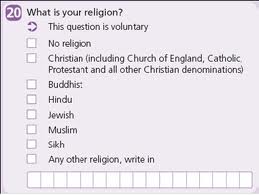
Every time we permit others to define us in terms of religion, by getting us to respond to loaded questions or calling us "atheists", we are playing into their hands by allowing them, instead of accepting us for what we are, to pass off their irrational superstition as the norm. It isn't.
Thursday, 27 January 2011
Anti-Christian Discrimination? What a load of Bull!
Peter and Hazelmary Bull, the Christian B&B owners who refused to let a homosexual couple share a bed in their B&B, have decided to appeal against the judgement that declared that they should pay damages to the two men they offended. The appeal is reportedly being funded by a fundamentalist Christian organisation.
Christians in Britain claim that they are being discriminated against. If they are, this case does not support that thesis: the law does not allow the people with any religious affiliation (or with no religious affiliation) to behave in the bigoted way the Bulls did. To be treated, in the eyes of the law, exactly the same way everybody else is treated, is not discrimination.
On 2011 Jan 26, the BBC programme, The Moral Maze, addressed another aspect of this issue. Many Several contributors seemed to suggest that religious principles are being subverted by laws that prohibit discrimination against protected groups. This is entirely incorrect. To take the Bulls' case as an example, nobody has compelled them to run a B&B. It is illogical in the extreme to choose an occupation if the laws that govern it do not permit you to exercise your own particular brand of bigotry. The Bulls chose to sell a service; like the sellers of any other service, they have to abide by all the laws that govern that service. To permit them to contravene those laws because they believe a particular species of superstitious irrationality would, in effect, be discriminatory against anyone who does not share that belief.
Discriminated against? What a load of Bull!
Subscribe to:
Posts (Atom)